Mental Health and Trauma Support Services encompass a range of care, including Counseling and Psychiatry Services (CAPS) and the Employee Assistance Program (EAP). Together, these services provide mental health support for the campus community.
2025 CAPS Highlights
CAPS expanded its clinical services with Alcohol and Other Drugs (AOD) Counselor
CAPS expanded its clinical offerings by adding a dedicated Alcohol and Other Drugs (AOD) Counselor, addressing a longstanding gap in campus mental health care. This specialized role provides comprehensive support for students impacted by substance use, including assessment, early intervention, harm reduction strategies, and ongoing therapy. In addition, the AOD Counselor strengthens prevention efforts through workshops, consultations, and campuswide programming, ensuring a more holistic approach to student wellbeing.
Caring Through Service: Strengthening Community and Supporting Student Wellbeing
On February 13th, CAPS partnered with the Center for Community Engaged Learning to host Caring Through Service, a campus-wide event focused on community building, service, and advocacy. Spartans gathered to champion mental health initiatives, deepen connection, and give back to the community. Participants assembled Essential Needs Kits and created Mental Health Kits for themselves, for peers, or for donation to CAPS, also engaging in a friendship-bracelet activity designed to foster connection, creativity, and belonging.
Student Mental Health Ambassadors Provide Peer-to-Peer Education and Support
Nineteen student ambassadors are leading the way in fostering a more connected, inclusive, and mentally healthy campus by offering peer education and support. Their work reflects decades of research demonstrating the effectiveness of peer-to-peer approaches in promoting mental health. In collaboration with the CAPS Outreach Committee, ambassadors engage in outreach events, provide wellness resources to their peers, and deliver presentations on mental health topics to increase awareness and strengthen support across campus.
Out of the Darkness Suicide Prevention Walk Raises Awareness and Funds
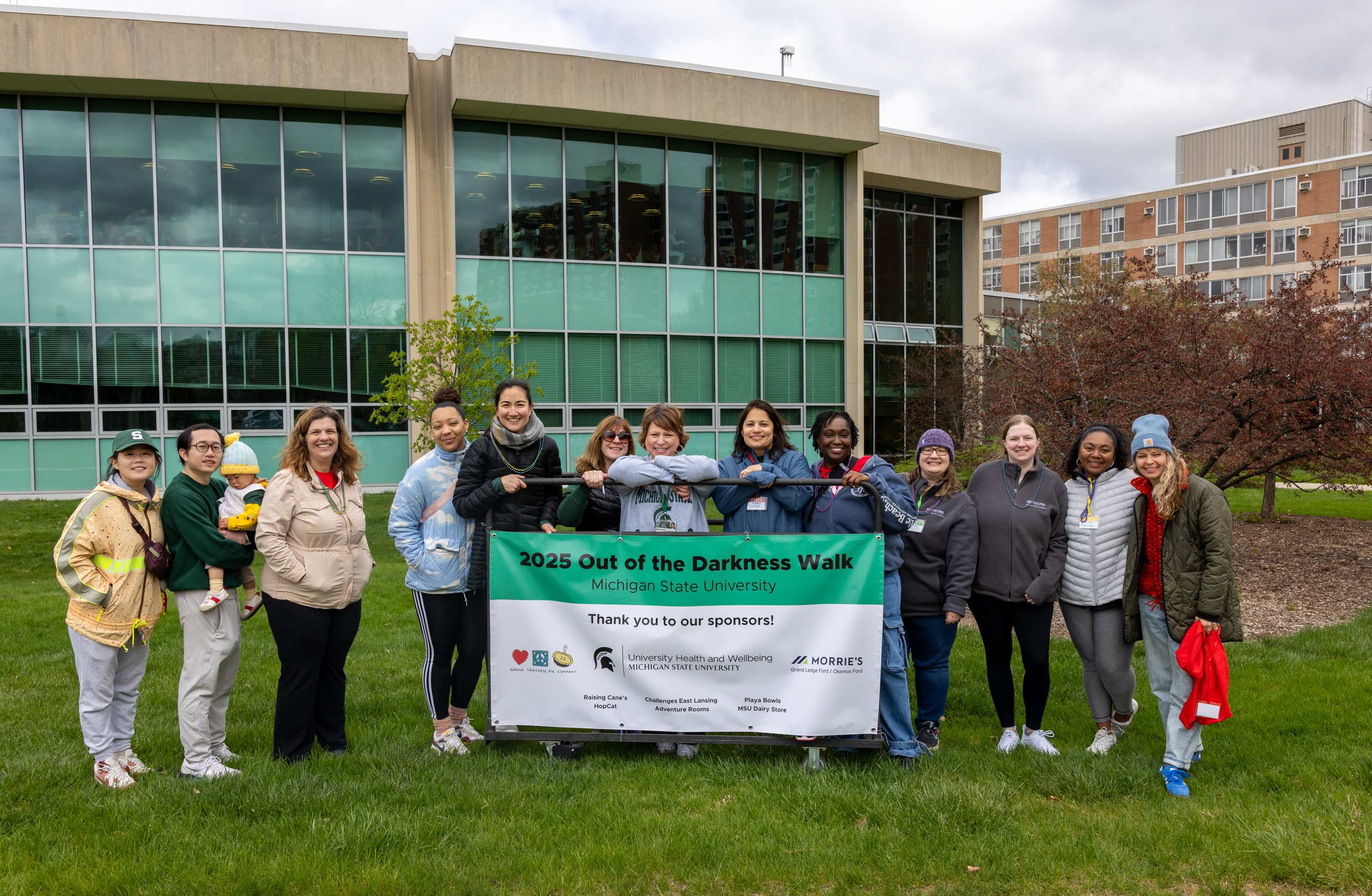
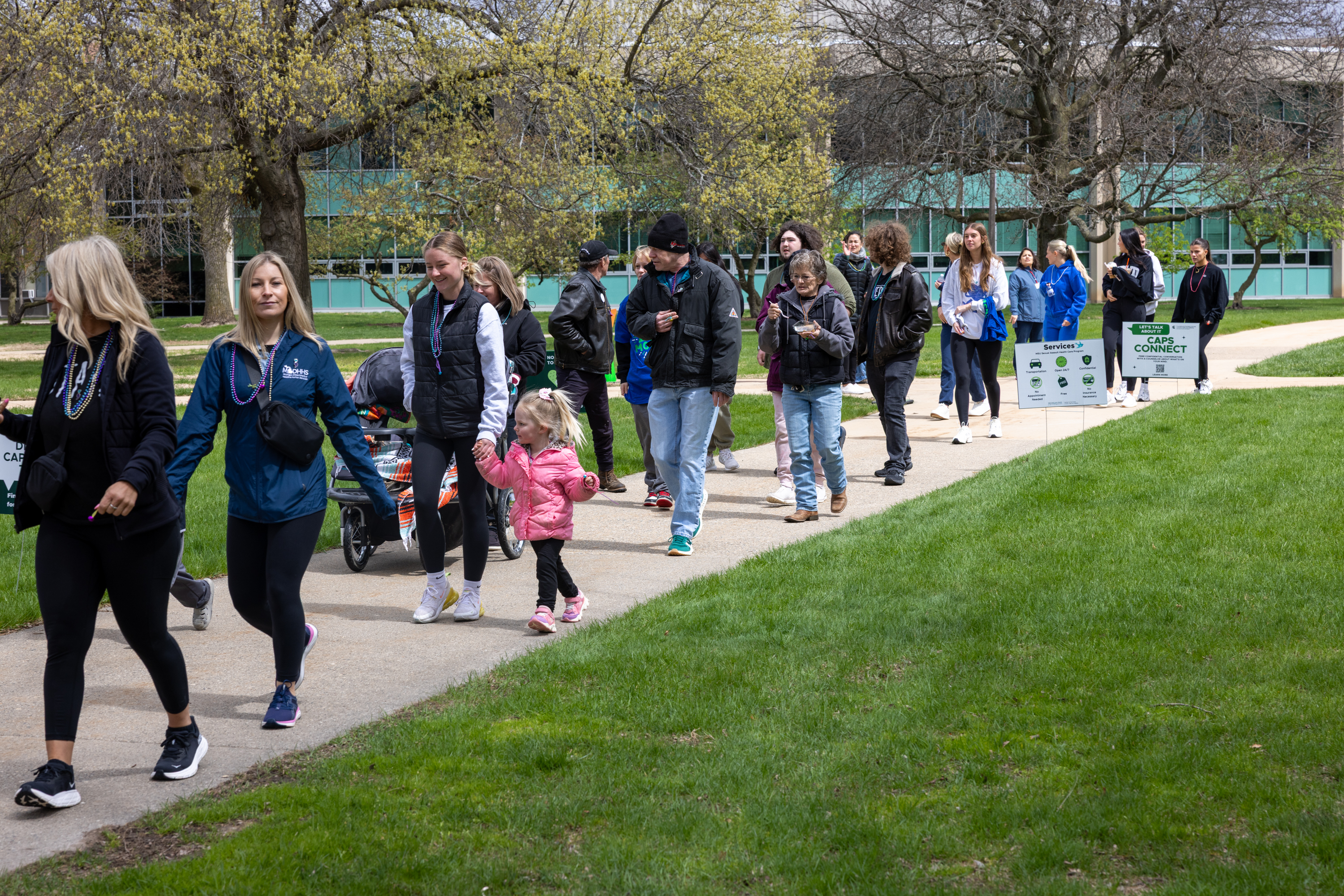
In collaboration with the Michigan Chapter of American Foundation for Suicide Prevention (AFSP), CAPS hosted an Out of the Darkness Campus Walk to raise awareness and funds for suicide prevention. This powerful event brought together students, faculty, staff, and community members in a shared committed to mental health and healing. More than 240 individuals participating, raising $9,456 to support the American Foundation for Suicide Prevention’s mission and expand access to life-saving resources.
Community Discussion on Suicide Awareness
In partnership with the Department of Theatre, CAPS hosted a community discussion following two theatrical productions that addressed themes of suicide. Using the plays as springboards to the event explored suicide portrayals in media, myths vs facts, and ways to support mental health.
Big Ten Collegiate Mental Health Center Conference Unites Mental Health Providers
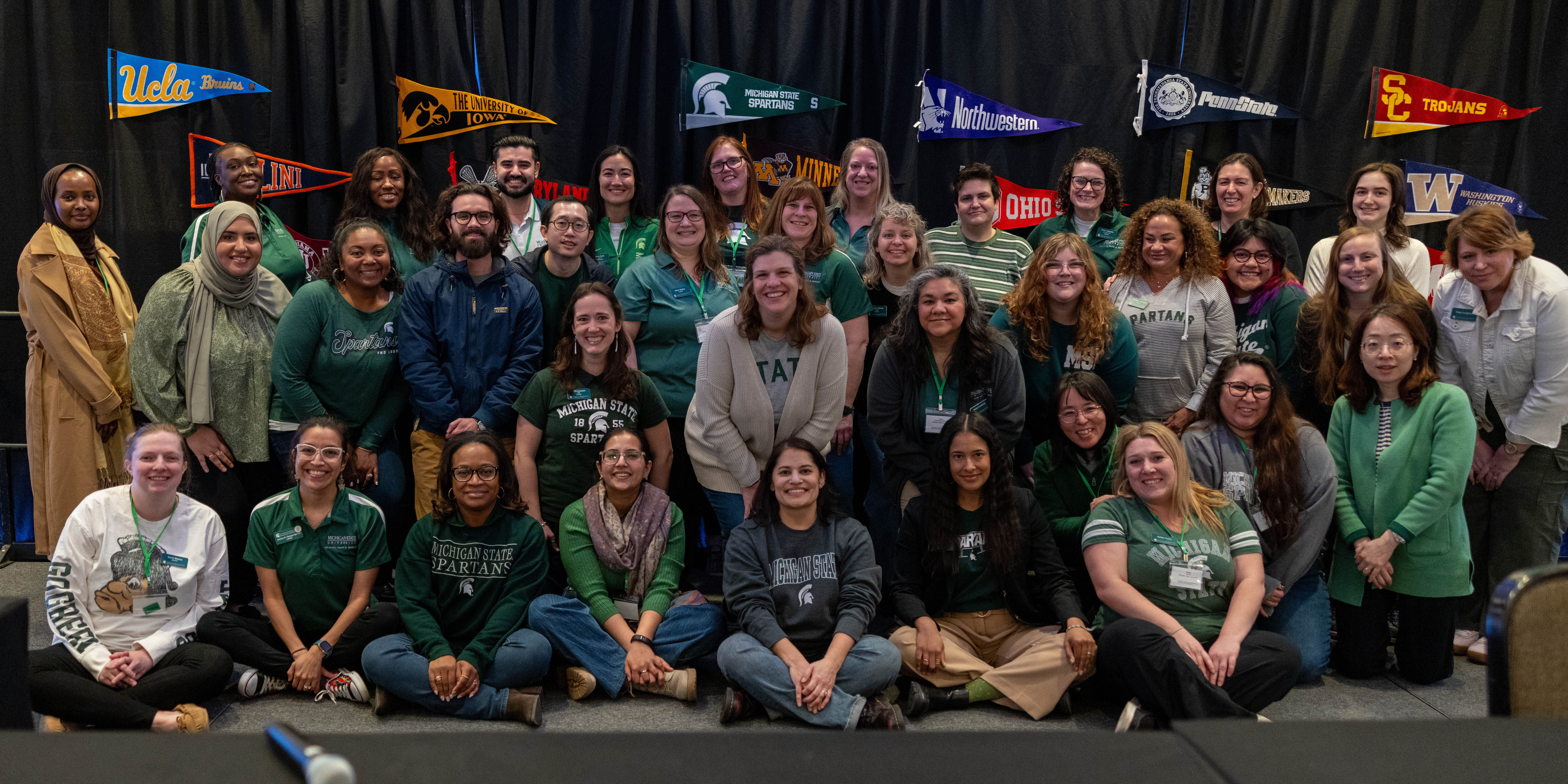
CAPS hosted a three-day conference for higher education mental health providers across the BIG Ten network of colleges, as well as other universities within Michigan. Attendance exceeded 190, with participation from 13 of the 18 Big Ten schools and two universities within Michigan. The event featured presentations and breakout sessions centered on the theme: “Multiple Ways of Knowing, Doing, and Being in Collegiate Mental Health: A Collective Call for Social Justice Through Integrated, Holistic, and Multiculturally Responsive Care.” The conference fostered collaboration, innovation, and shared learning to advance inclusive and equitable mental health support across campuses.
Showcasing National Leadership in Collegiate Mental Health
CAPS demonstrated its leadership in advancing mental health services in higher education through presentations at two major conferences: Association for University and College Counseling Center Outreach (AUCCCO) Annual Conference and the Association for University and College Counseling Center Directors (AUCCCD) national meeting.
2025 CAPS Metrics
Mental Health Outreach
Training Programs
For 2024 data, please visit the 2024 UHW Annual Report
What students are saying about CAPS
“I'm a first gen student and when I got to MSU I felt like I had to figure out everything on my own, and I didn’t want to admit when I was overwhelmed. Reaching out for therapy at CAPS was hard at first, but it ended up being one of the best decisions I made. It gave me space to breathe, to ask for help, and to not feel like I had to carry everything by myself.”
2025 EAP Highlights
Providing Accessible Care Through Decreased Wait Time and Eligibility
In 2025, EAP served more Spartans than at any point in the past decade, while simultaneously maintaining a wait time of one week or less, supported by the addition of two half-time clinicians. This level of access stands in contrast to many community-based therapies, which often wait times of 4 weeks or longer. Additionally, in contrast to some university internal EAPs, MSU provides support to not only faculty, staff, and their families, but also to retirees or benefits-eligible graduate student assistants, ensuring that care is accessible to the broader campus community.
Providers with Institutional Knowledge Offer Distinct Value Over Community-Based Therapy
EAP continues to distinguish itself from community-based therapy options through its institutional expertise and tailored support for Spartans. Providers understand the unique dynamics of working within MSU, ranging from union environments and the pressures of tenure to crisis response and the landscape of campus resources, allowing them to deliver support that is both relevant and impactful. This institutional insight also informs educational and consultation efforts, which can be customized to address emerging needs across campus. This was evidenced this year in part to sessions focused on navigating uncertainty, burnout, and the loss of beloved fellow Spartans.
Confidence in Confidentiality
The EAP’s unique placement within the university allows faculty and staff to seek support with confidence that their information remains fully confidential. Unlike many internal EAPs housed within Human Resources, where employees may worry about privacy, our structure provides an added layer of separation and reassurance, ensuring that individuals can access care without concern about how their information is handled.
After-Hours Crisis Line Supports Employees Around the Clock
Employees can access support outside of regular business hours by calling the main EAP phone number. Callers can choose to leave a voicemail for a return call or be redirected to a trusted vendor for immediate assistance to ensure that employees are never alone in a moment of need.
New Support Group Addresses Stress and Burnout
A new support group, “Breaking the Cycle: Stress and Burnout in Academia”, designed to help employees seeking relief from the demands of stress, burnout, and overwhelm. Nineteen participants learned evidenced-based strategies to complete their stress cycle and developed tools for setting boundaries, fostering resilience, and rediscovering joy in their work.
Supporting Teams During Challenging Situations
EAP continued to provide supportive consultation services to academic departments during an emotionally or psychologically challenging situation, such as the death of a colleague or a student, or the loss of stability within the unit/department. In some cases, a single consultation with a supervisor equips leaders with the skills and guidance needed to support their teams effectively. In others, the consultation leads to broader services for the entire work group. All support is tailored to the unique needs of each team and remains free of charge, reflecting EAP’s commitment to fostering a healthy and supportive working environment for all MSU employees.
Specialized Therapy Treats Symptoms of Post-Traumatic Stress Disorder
A free therapy option for employees struggling with post-traumatic stress disorder (PTSD), Prolonged Exposure for Primary Care, offers evidence-based, trauma-informed cognitive behavioral treatment. Sessions over six to eight weeks aim to decrease avoidance and work through painful memories in a safe and supportive environment to decrease symptoms.
EAP Road Show Expands Awareness of Services
The EAP Road Show, presented to more than 12 units and departments, raised awareness of the valuable services available to faculty and staff.
2025 EAP Metrics
Counseling
Other Services
Outreach/Supportive Groups/Organizational Sessions
For 2024 data, please visit the 2024 UHW Annual Report
What employees are saying about EAP
“I appreciated that [my EAP provider] still made me feel comfortable and at ease during the conversation even though we were discussing hard topics across a computer screen.”