Content Advisory: The following contains information about suicide prevention
MSU marks a meaningful milestone in its commitment to prioritizing the mental health of our campus community by now offering an evidence-based, free, one-hour, virtual suicide prevention training.
Recent national research suggests a promising shift in college student mental, with fewer students reporting experiences of depression, anxiety, loneliness, and suicidal thoughts, a trend credited by public health strategies focused on prevention and population-level approaches1.
Yet, like many campuses across the country, Michigan State University continues to face mental health challenges. According to recent data:
- 74% of MSU students said they have been diagnosed or treated for overwhelming anxiety2
- 72% of MSU students said they experience moderate to high stress2
- 29% of MSU students said they have felt hopeless2
- 50% of MSU faculty and staff are concerned about how their stress level impacts their health3
In addition, among students, faculty, and staff:
- Only 50% know where to go if they are concerned about their mental health3
- Just 50% feel a sense of belonging3
These numbers highlight the urgent need to continue fostering a culture of care that ensures every Spartan has access to the support they need to reach their full potential. As a health-promoting university, MSU is committed to creating an environment where students, faculty, and staff feel supported and cared for. Mental health is a vital component of success, and by prioritizing wellbeing across the entire campus community, we are empowering individuals to succeed academically, professionally, and personally.
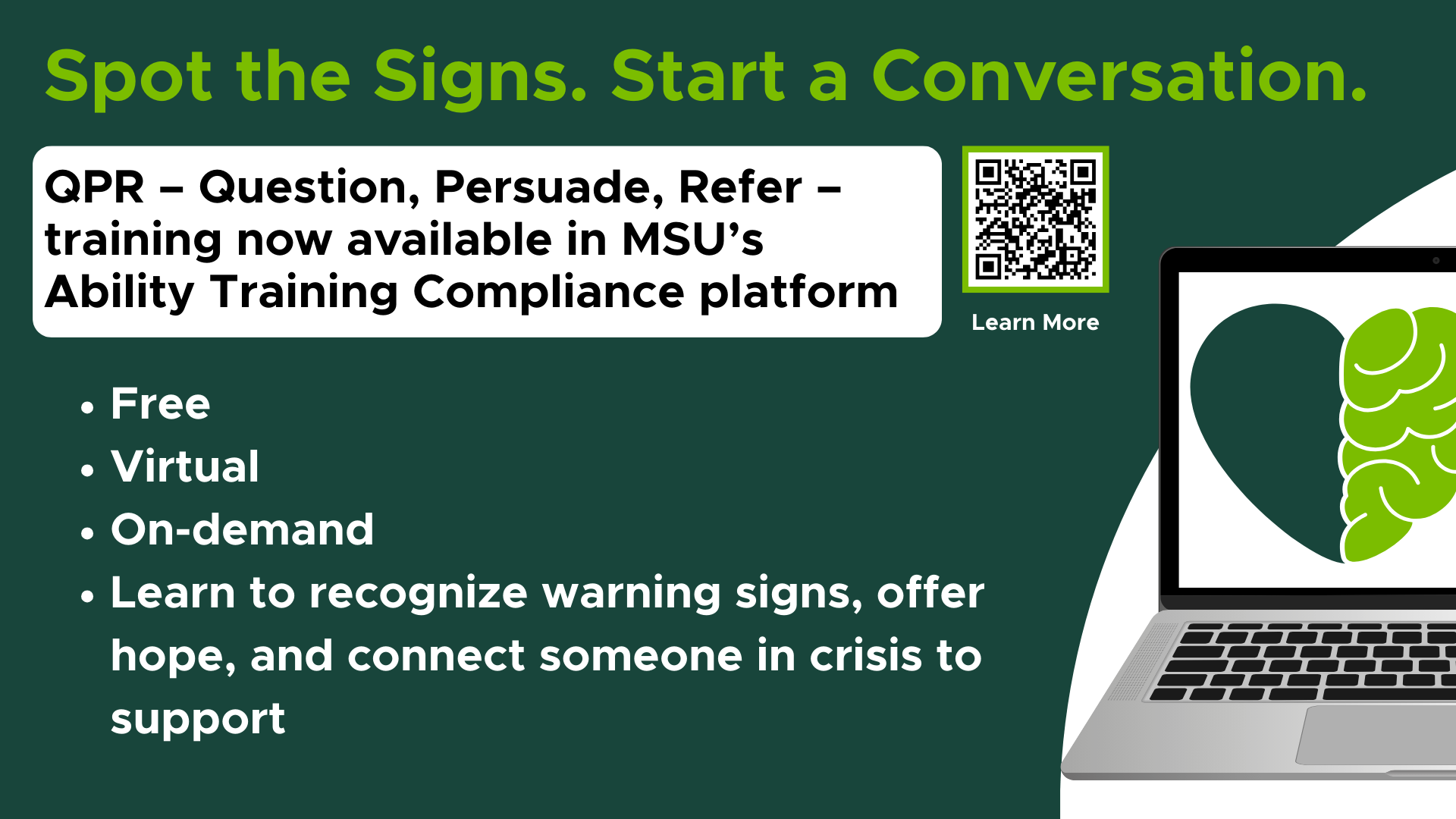
As part of this commitment, UHW has partnered with QPR Institute to provide their evidence-based, free, one-hour, virtual suicide prevention training. The QPR (Question, Persuade, Refer) training equips everyday individuals to respond effectively in moments of need. It is part of broader efforts to strengthen campus-wide capacity for primary prevention and to foster confidence in Spartans in having open, compassionate conversations about mental health in a sustainable way.
Training topics include:
- Common causes of suicide
- Recognizing warning signs
- Offer hope
- Connect someone to help
This recommended training is available to students, faculty, and staff. Access the training now through MSU’s Ability Training Compliance platform (My Menu -> My Requirements) and help build a safer, more compassionate campus community.
Gatekeeper trainings such as QPR are becoming a fundamental component of mental health strategies at campuses nationwide. Within the Big Ten, 14 universities have formally implemented suicide prevention training, six of which utilize QPR. The impact is clear:
- 97% of QPR participants rated it “above average’ or “outstanding”4
- 42% of participants identified at least one at-risk youth and intervened within six months of taking the training after a state-mandated training in Tennessee4
This initiative builds on years of work by UHW, which has embraced a population health approach to suicide prevention. From CAPS counselors embedded in six colleges across campus for enhanced accessibility, to the You’re Not Alone campaign, Spartan Resilience Education programs, and events like Fresh Check Day and the Out of the Darkness Walk, our collective efforts are making a difference.
While there is still work ahead, this training marks a meaningful step forward in strengthening our campus community and ensuring Spartans feel cared for. By equipping more individuals with this knowledge, we expand our collective ability to make a real and lasting impact.
Download a flyer and a digital monitor graphic to encourage training completion.
- Health Minds Study, 2024-2025, n=84,000 students
- NCHA III, 2024, n=931
- UHW Survey, 2024, n=4,696
- QPR Institute: Practical and Proven Suicide Prevention Training