Spartans celebrate big, and Spartans party smart.
This guide can help you plan and enjoy safe celebrations. Included are alcohol safety tips and information on how to stay safe at parties so you and your friends have the best experience.
Our Top Tips for Harm Reduction
- Before You Go Out:
- Have a Plan: Talk to your friends about where you’re going and who you’re going with, as well as a backup plan. This avoids confusion and makes sure no one ends up in an unsafe situation.
- Set a Limit: Stay in control by deciding how many drinks you feel comfortable having. Keep track in your phone or by saving bottle caps or cans.
- Eat Before, During, and After Drinking: Have a meal before drinking and bring snacks to eat throughout the night. Drinking on an empty stomach can make you feel sick or risk a worse hangover.
- While You’re Out
- Stay With and Look Out for Your Friends: Travel with people you would trust and stay together. These friends can help you spot when the vibe is off and make sure you get home safe.
- Make and Measure Your Own Drinks: Pour your own drinks so you know exactly what’s in them. This can also help you track your alcohol intake.
- Alternate Alcoholic Drinks with Non-Alcoholic Ones: Stay hydrated and pace yourself by drinking water, juice, or another non-alcoholic option between alcoholic drinks.
- Ending the Night Safely
- Get Home Safely: The night isn’t over until everyone is home safe. Use or be a designated driver, walk with friends, or use a rideshare.
Blood Alcohol Content (BAC) is a measure of the amount of alcohol in your blood. As you drink, your BAC increases, changing how you think, feel, and interact with your environment.
The Good, The Bad, and The Ugly: How BAC Affects You
Alcohol affects people differently depending on factors like body size, speed of consumption, hydration, food intake, and other factors. However, ranges of BAC generally correspond; we call these ranges the “Good,” the “Bad,” and the “Ugly.”
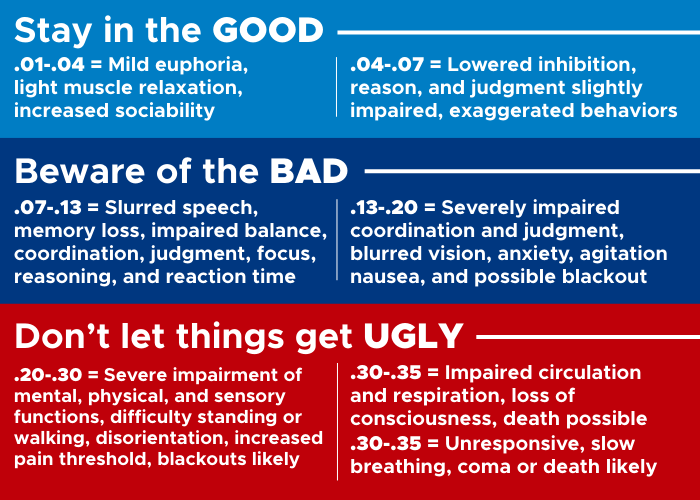
For the average Spartan, about one standard drink per hour keeps BAC in the “Good” range. If you notice your symptoms are in the “Bad,” slow down – switch to water or another hydrating beverage while your body processes alcohol. If you or a friend is showing signs of being in the “Ugly,” stop drinking immediately. Stay with others and consider seeking medical attention to prevent health consequences.
Visit Alcohol.org’s BAC calculator to measure your BAC.
What Counts as One Standard Drink?
A standard drink is approximately:
One 12oz serving of beer (~5% ABV)
One 5oz serving of wine (~12% ABV)
One 1.5oz serving of liquor (80 proof alcohol or ~40% ABV)
Each of these drinks contain roughly the same amount of alcohol.
In Case of Emergency
- Make the Call: Medical Amnesty:
- Trust Your Gut
- If you feel someone may be in medical trouble, they probably are. Protect yourself and others by seeking help before help finds you.
- Know You’re Protected
- MSU’s Medical Amnesty Policy states that if you seek help for yourself or someone else during a drug‑ or alcohol‑related medical emergency — or if you receive medical attention as a result of another Spartan calling for help — you will not face disciplinary action for violating MSU’s drug or alcohol use or possession policies.
- Call For Help
- If you need to call for help, call 911 if you can; text if you can’t. Stay with the person you are helping until help arrives.
- Trust Your Gut
Medical emergencies include, but are not limited to alcohol poisoning/overdose, drug overdose, and physical injuries that resulted from substance use.
Additional Resources
Help is available.
If you are an MSU student, you have access to a free, anonymous, online tool that can give you personalized feedback on your alcohol use.
eCHECKUP TO GO helps identify potential risks associated with drinking. MSU students may complete this assessment as many times as needed, enabling them to monitor their alcohol use over time.
Visit eCHECKUP TO GO and follow the instructions to get started.
University Health and Wellbeing also offers counseling services to Spartans:
- Students: Connect with Counseling and Psychiatric Services to receive support from a clinician who specializes in alcohol and other drug counseling.
- Employees and benefits-eligible dependents: Connect with the Employee Assistance Program.