CAPS aims to create a culture of care on campus through mental health education, stigma reduction, and spaces of healing that are inclusive and culturally responsive.
CAPS has a long history of prioritizing mental health access. In 1968, the Multi-Ethnic Counseling Center Alliance (MECCA) was formed to better serve students of minoritized racial and ethnic backgrounds. This legacy has been a critical part of staff training in culturally and racially responsive care, as well as the development of creative outreach initiatives that contribute to prevention and healing for all students.
Like many other collegiate mental health centers, MSU CAPS has used the term “outreach” to represent services that are not considered formal treatment, but still promote mental wellbeing among students. CAPS also uses the term “community engagement” to capture its ongoing collaboration with students and campus partners outside of the clinical context.
The primary aim of outreach and community engagement at CAPS is to build a community of care on campus through mental health education, stigma reduction, and healing spaces that are inclusive and culturally responsive. We believe in a relational approach that requires collaboration with students, campus partners, and UHW/CAPS staff. Examples of outreach services include:
- Presentations on mental health topics of interest (e.g., imposterism, stress management, mindfulness, self and community care)
- Reflect & Connect sessions (facilitated spaces hosted outside of CAPS locations to share reactions to community tragedies or hardship)
- Critical incident response (resource info and brief support following the death of an MSU community member)
- Consultation with students and campus partners (mental health event planning, trauma-informed practices, etc.)
- Resource fairs/tabling to promote awareness of mental health services
Outreach services are provided by a range of CAPS staff and supporters, including:
- Student Mental Health Ambassadors
- Masters-level, doctoral-level, and post-degree training staff
- Senior staff including licensed clinical social workers, counselors, psychologists, and psychiatry team members
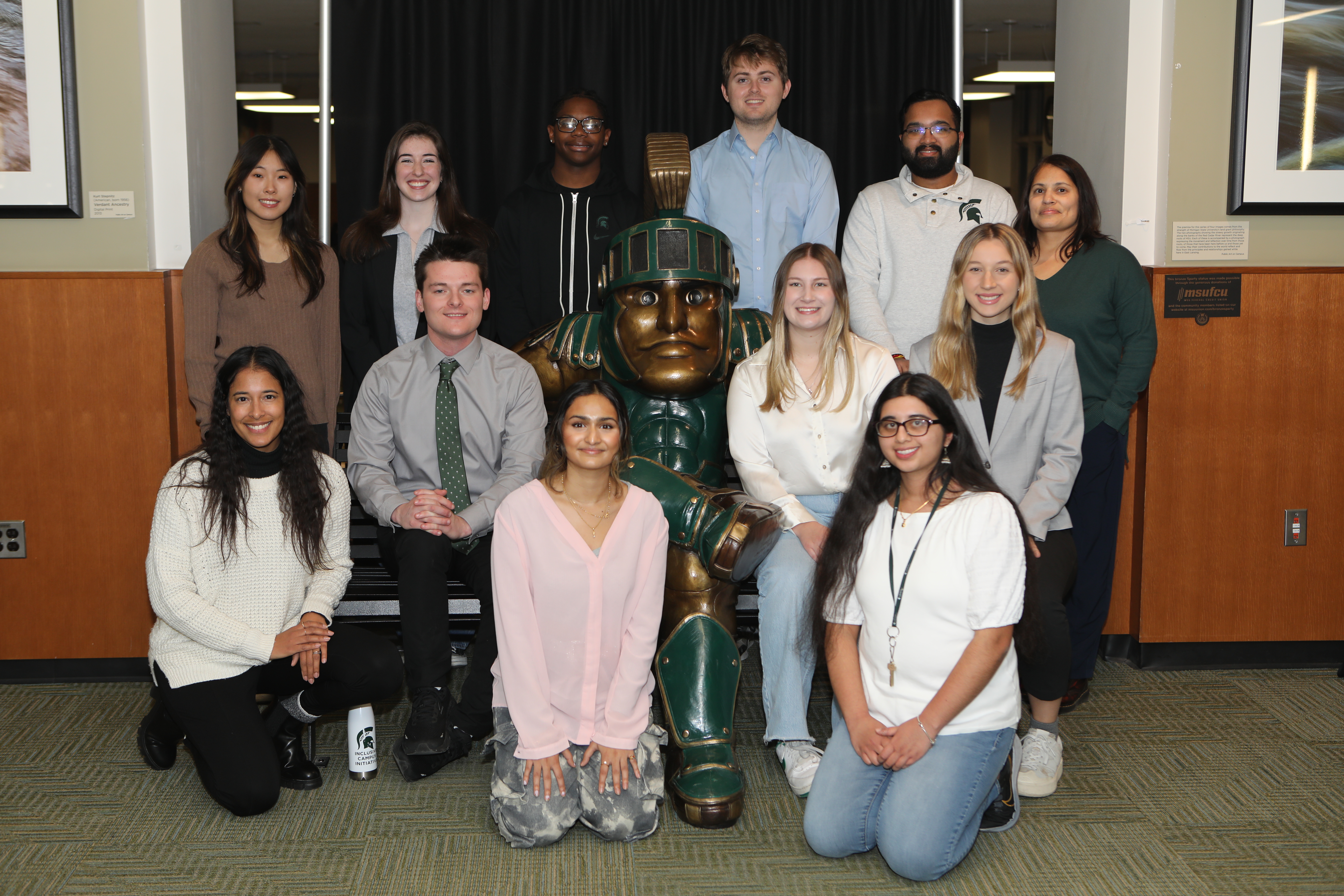
Interested in creating a culture that cares for the mental wellbeing of your fellow Spartans? Apply to be a CAPS Student Mental Health Ambassador! Internships for the 2026-2027 academic year are available! Learn more and apply.
Questions? Email Lauren Enty at entylaur@msu.edu.
As a part of the CAPS Outreach team, the SMHA program strives to provide inclusive and community centered programming for students by students. Students who are in the SMHA program will:
• Receive valuable trainings on specialized topics (like seasonal affective disorder or suicide prevention)
• Learn more about different career pathways within mental health
• Volunteer for mental health related events
• Join a community of Spartans who want to contribute to a campus of holistic wellbeing and mental health services
• A small cohort of students will be interviewed for Peer Counseling opportunities.
Make a Request
The University Health and Wellbeing Health Promotion and Engagement Team manages all engagement requests made to UHW units. CAPS outreach requests are reviewed by CAPS team members, and a staff member will follow up with you to coordinate.
Due to high demand during the academic year, we recommend submitting requests at least two weeks in advance of your event whenever possible.
If we cannot meet your request, we will explore alternative options.
Requests submitted after 5 p.m. may not be reviewed until the next business day.
Please note: To create a safe space for dialogue and questions, recording is not allowed during outreach events unless written consent is provided or the host has explicitly stated that the session will be recorded. Please discuss this with a CAPS outreach team member if you are considering recording.
Mental Health First Aid or QPR Training
Interested in scheduling a training for your department or RSO?
Contact Olivia Scott at scottol1@msu.edu.
CAPS Outreach Feedback
We want to hear from you! If you recently coordinated an event with CAPS or attended an event involving CAPS, please complete this feedback form.