It’s important to weigh the possible benefits and risks of being sexually active. To be healthy sexually is to maintain a balance with everything else in your life – your physical and emotional health, career and educational goals, relationships with other people, and your feelings about yourself.
If you’re sexually active, select the contraceptive method right for you based on cost, effectiveness, ease of use and safety. Most sexually transmitted infections (STIs) are curable or manageable – the key is early detection and treatment.
Dive into the latest student trends on sexual wellness.
Emergency contraception pills are a method of emergency contraception that can be used to prevent pregnancy after sexual intercourse. There are multiple locations to access emergency contraception pills (aka Planned B) for free on campus, listed below as partnered with the registered student organization EL FREE EC:
- Olin Health Center Customer Service (UHW)
- The Gender and Sexuality Campus Center (GSCC)
- Women*s Student Services (W*SS)
- Center for Gender in Global Context (GenCen)
- Spartan Housing Cooperative (SHC)
- Pathways to Persistence Programs
Health Vending Machines (Emergency Contraceptives are $10):
- MSU Union, across from Strange Matter Coffee (M-Sat 7 a.m. - 11 p.m., Sun 9 a.m. - 11 p.m.)
- Multicultural Center (M-Thur 9 a.m. - 11 p.m., Fri 9 a.m. - 6 p.m.)
- Akers Hall (M-Fri 7:30 a.m. - 6 p.m.)
There are different versions of emergency contraception pills that are available in different contexts, for more information we recommend checking out Planned Parenthood’s educational resources on emergency contraception.
Confidential STI testing on campus is available by appointment through Campus Health Services Primary Care and Gynecology Clinic. All testing, treatment, and counseling are handled in a strictly confidential manner. To schedule a confidential STI testing appointment, please call 517-353-4660.
Together, you and your clinician will determine what tests, if any, are appropriate. Tests may require:
- A urine sample
- An oral, vaginal, or rectal swab
- A cervical culture or a blood draw
STI tests available include:
- Chlamydia/Gonorrhea
- Syphilis
- Herpes
- Human Papilloma Virus (HPV)
- Human Immunodeficiency Virus (HIV)
Providers can also provide you with educational information and/or referral for any other sexual health questions or concerns you may have.
The Gender and Sexuality Campus Center offers free and confidential drop-in STI testing multiple times a month at different locations around campus. Find more information about testing times and locations on their Instagram page @msugscc, or through the weekly GSCC newsletter.
Routine gynecology care is available through Campus Health Services Gynecology Clinic. To schedule a gynecology appointment, please call 517-353-4660 or if 18 years or older book an appointment online.
Transgender health care is available through Olin Health Center. To schedule an appointment on initiating or continuing transgender care, please call 517-353-4660 or if 18 years or older book an appointment online.
On-campus and need safer sex supplies?
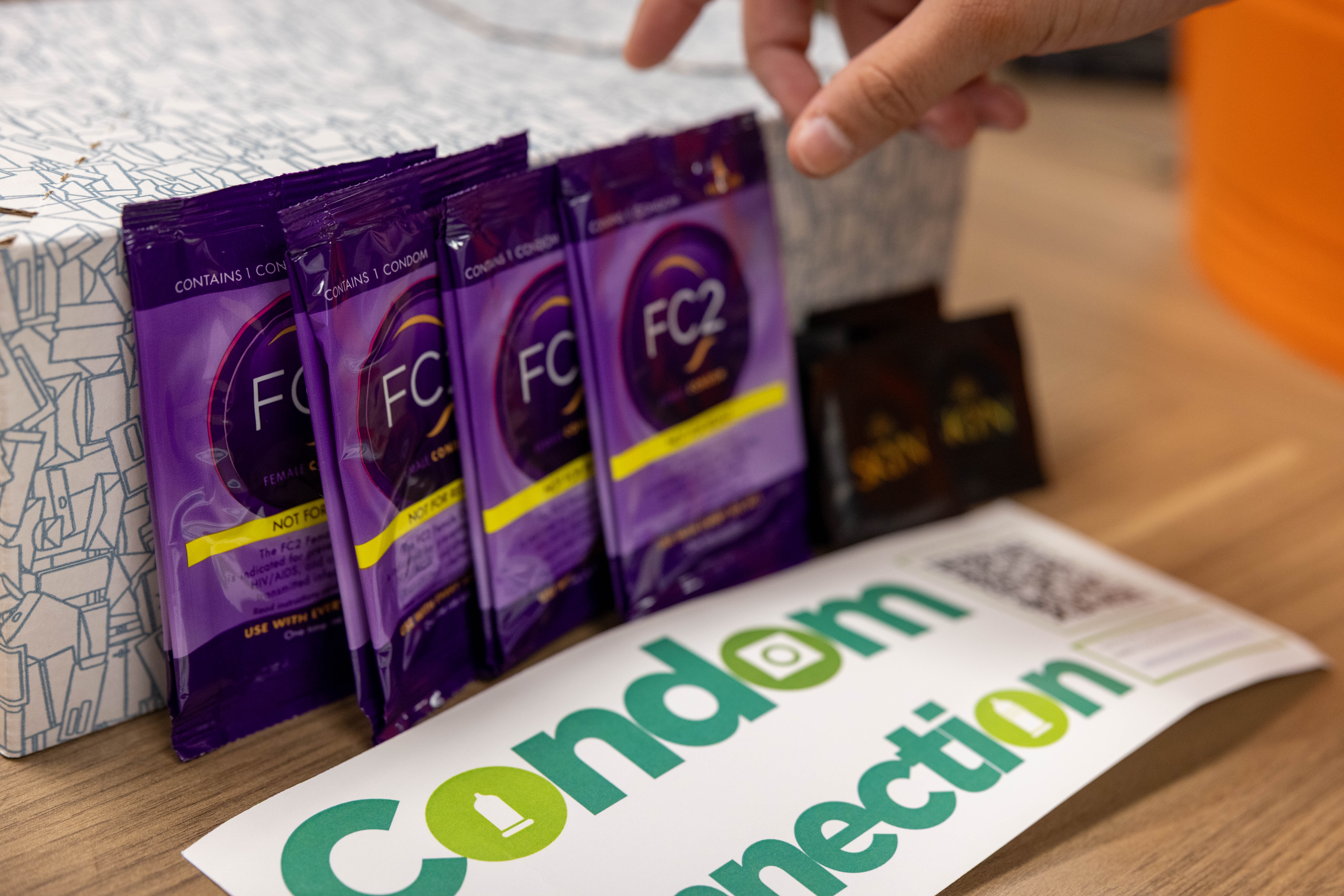
Health Promotion offers free safer sex supplies delivered through campus mail to on-campus students. Supplies available include external condoms, internal condoms, non-latex condoms, dental dams, and single-use water-based and silicone-based lubricants. These items are available for individual students, campus partners, and event requests. Health Promotion also provides safer sex packs (containing 50 external condoms) to RAs. These packs are for distribution to residents upon request and are available twice during fall semester and once during spring semester.
Submit a request for safer sex supplies
Health Vending Machines:
- MSU Union, across from Strange Matter Coffee (M-Sat 7 a.m. - 11 p.m., Sun 9 a.m. - 11 p.m.)
- Multicultural Center (M-Thur 9 a.m. - 11 p.m., Fri 9 a.m. - 6 p.m.)
- Akers Hall (M-Fri 7:30 a.m. - 6 p.m.)
Off-campus and still need safer sex supplies?
Visit the Health Promotion Office in Room 345 of the Student Services Building to access free safer sex supplies. A self-service supply bin is available outside Room 345. You can take supplies anonymously, no questions asked. Available items include:
- Condoms (internal, external, and non-latex options available)
- Dental dams
- Lubricant (water-based and silicone-based options available)
Supplies are available during Student Services Building hours. Check the current schedule on the Infrastructure Planning and Facilities building hours page.
Free Delivery Within Michigan
If you live in Michigan, you have multiple options to order free safer sex supplies and have them delivered to your home. Submit a request through Corktown Health's safer sex supply order form. You may also submit a request through the County of Midland Department of Public Health's request form.
At-home pregnancy tests are a method of testing for pregnancy that work by checking urine for the pregnancy hormone human chorionic gonadotropin (hCG) hormone. hCG hormone is only produced by the body when a fertilized egg has implanted. There are multiple locations to access free or low-cost pregnancy test kits on campus, listed below:
Free locations:
Olin Health Center Customer Service (UHW)
Spartan Shelf Food Bank at the Union (UHW)
The Gender and Sexuality Campus Center (GSCC)
Health Vending Machines
- MSU Union, across from Strange Matter Coffee (M-Sat 7 a.m. - 11 p.m., Sun 9 a.m. - 11 p.m.)
- Multicultural Center (M-Thur 9 a.m. - 11 p.m., Fri 9 a.m. - 6 p.m.)
- Akers Hall (M-Fri 7:30 a.m. - 6 p.m.)
Safer Sex Information
Consent
Sexual consent is an agreement to participate in sexual activity with another person/other people. Consent informs someone that sexual activity is wanted and is needed every single time people are engaging in sexual activity with one another, otherwise sexual activity without consent is sexual assault.
To better understand consent, we recommend folks get familiar with Planned Parenthood’s FRIES acronym that describes the components of sexual consent:
- Freely given: Consent is a choice made without pressure, manipulation, or the influence of drugs or alcohol.
- Reversible: Anyone can change their mind about what they feel like doing, anytime. Even if they’ve done it before, and even if they initially suggested the activity.
- Informed: Folks can only consent to something if they have the full story. For example, if someone says they’ll use a condom and then they don’t, there isn’t full consent, and this is then considered a form of sexual assault.
- Enthusiastic: When it comes to sex, people should only do stuff they WANT to do, not things that they feel they’re expected to do.
- Specific: Saying yes to one thing (like going to the bedroom to make out) doesn’t mean someone necessarily said yes to others (like having sex).
Campus Resources
The MSU Gender and Sexuality Campus Center (GSCC) is a department on campus that celebrates, affirms, and supports Queer and Trans individuals and communities at Michigan State University through advocacy, education, programming, and community-building. Learn more about their services.
Local and Digital Resources
Need additional sexual wellness resources? Below are a list of some online resources and local non-MSU resources: